
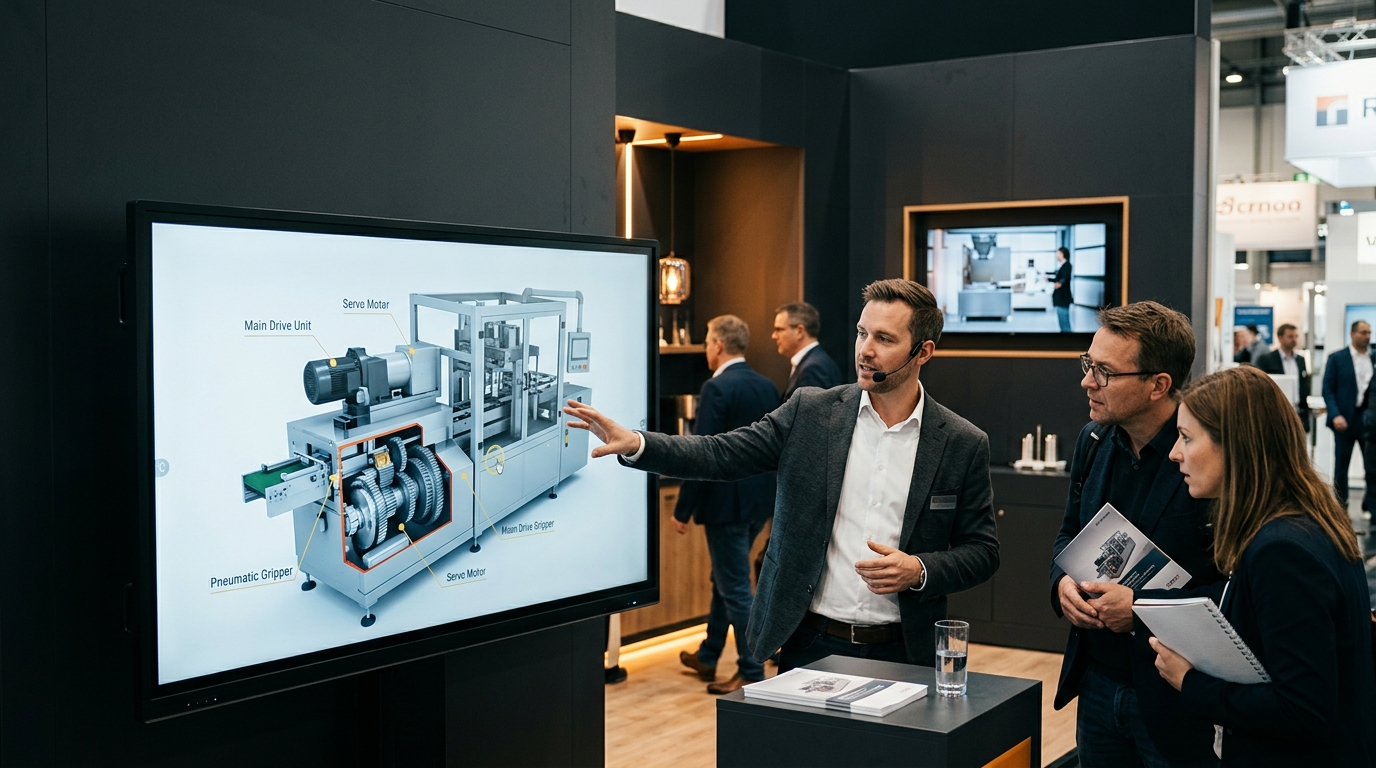
Interactive 3D Machinery Simulation vs. Traditional Product Videos: Unlock Industrial Sales Power Now

By Chan Park, SuperBot Industrial

In the competitive landscape of industrial sales, businesses constantly seek innovative methods to connect with potential customers. Interactive 3D machinery simulations represent a cutting-edge approach to product demonstration, providing not only visual appeal but also an engaging user experience that can lead to higher conversion rates. This article explores the distinct advantages of interactive 3D simulations over traditional product videos, highlighting how they can enhance customer engagement and influence purchasing decisions. You will learn key benefits such as improved understanding of products, data collection capabilities, and how such tools are revolutionizing lead generation strategies. Additionally, we will discuss the cost advantages, essential features of successful simulations, and their role in modern industrial sales strategies.

Advantages of Interactive 3D Simulation

Interactive 3D simulations provide numerous advantages that make them superior to traditional product videos. By allowing users to engage directly with products, these tools create a more immersive experience. This interactivity fosters enhanced engagement, as customers can manipulate 3D models, explore features in detail, and visualize how machinery will fit into their operations.

Moreover, these simulations lead to improved understanding of complex products. Users can see machinery in action and interact with various components, which helps clarify potential applications and benefits. The ability to collect valuable user data during these interactions further adds to the effectiveness of 3D simulations, allowing businesses to tailor their marketing strategies and enhance lead qualification.

For companies like SuperBot Industrial, which specializes in lead generation, leveraging interactive 3D simulations means not only showcasing products effectively but also maximizing customer insights.

Effects on Customer Engagement

The use of interactive 3D simulations significantly impacts customer engagement. These simulations allow potential clients to explore products in a virtual environment, offering an experience far more engaging than passive viewing. Features such as rotatable views, interactive hotspots, and real-time feedback create an immersive setting where customers can ask questions and learn actively.

Furthermore, personalized experiences can lead to memorable interactions. By providing a tailored exploration journey, businesses foster a deeper emotional connection with potential buyers. Scientific research shows that engagement levels with interactive content are typically higher than with traditional video content, resulting in increased retention rates of product information.

Integrating opportunities for demo requests within this context can significantly enhance engagement metrics. Companies can prompt users to schedule personalized demonstrations after they experience the interactive simulations.

Influence on Purchasing Decisions

Interactive 3D simulations play a crucial role in shaping purchasing decisions, allowing users to make informed choices based on interactive experiences rather than passive observation. By engaging with products directly, customers can visualize how different components fit together and understand the machinery’s functionality.

Informed decision-making is essential as buyers often face complexity and uncertainty when investing in industrial equipment. These simulations help streamline the sales cycle by addressing concerns upfront. Furthermore, the confidence built through this interactive exploration often accelerates the decision-making process, leading to quicker conversions.

The effectiveness of interactive demos in building customer confidence cannot be overstated. They serve as a crucial factor in validating purchasing decisions, ultimately improving sales performance.

Why Interactive 3D Machinery Simulations Dominate Industrial Sales?

Interactive 3D machinery simulations dominate the industrial sales landscape due to their unique capabilities. One of the primary advantages is the immersive experience they offer. Prospective customers can experience a product virtually, enhancing their understanding of its operation without the need for physical demonstrations.

Accessibility is another crucial factor. With the advancements in technology, customers can access these simulations from anywhere, making it easier for them to explore products without geographic limitations. This is particularly beneficial for businesses reaching out to wider markets.

Cost efficiency also plays a significant role. By reducing the necessity for physical prototypes and associated logistics, companies save time and resources that can instead be allocated to other critical business areas.

How Do 3D Simulations Ignite Engagement Beyond Traditional Videos?

3D simulations elevate engagement levels beyond what traditional videos can achieve through immersive exploration. Unlike passive video consumption, interactive elements allow viewers to engage with the content actively. Incorporating interactive hotspots enables users to delve deeper into specific features, making the learning experience engaging and insightful.

This interactivity translates into increased engagement metrics. Studies have shown that users are more likely to retain information from interactive content than from videos, leading to better-prepared buyers when they encounter sales representatives.

The combined benefits of heightened engagement and deeper understanding make interactive simulations a compelling choice for industry leaders seeking to enhance customer interactions.

What Makes Virtual Machinery Demos a Game-Changer for Sales Teams?

Virtual machinery demos are transforming the landscape for sales teams by enhancing customer engagement and facilitating remote demonstrations. These tools enable sales representatives to present products without the need for physical presence, a particularly vital aspect in today’s digital-first environment.

Enhanced customer engagement is a notable advantage, as interactive demos spark interest and allow clients to feel involved in their product exploration. Furthermore, this approach supports web and remote sales capabilities, meeting the demands of modern customers who prefer online interactions.

Additionally, the sustainability benefits cannot be overlooked. By reducing travel and logistics needs for showcasing products, companies not only optimize their resources but also contribute positively to environmental conservation efforts.

How Do 3D Product Visualizations Deliver Superior ROI Over Videos?

The superior return on investment (ROI) of 3D product visualizations compared to traditional videos is attributable to several factors. Firstly, these visualizations enhance booth engagement during trade shows, drawing more attendees compared to standard video presentations. Attendees are likely to spend more time interacting with 3D displays, leading to deeper discussions about product features.

Cost savings also contribute to a favorable ROI. With traditional videos, companies incur costs related to production, distribution, and logistics. In contrast, 3D visualizations can be reused across multiple platforms and events without the added logistics costs, further increasing profitability.

Faster decision-making is another key benefit, as potential customers are often quicker to act when they can visualize a product’s functionality and benefits. The ability to streamline the buying journey through effective product visualizations aligns with modern consumer expectations.

What Cost Advantages Do Interactive Demos Offer Compared to Video?

Interactive demos provide significant cost advantages over traditional videos. One of the primary benefits is the elimination of shipping costs associated with physical product demonstrations. With a remote demonstration, there is no need to transport equipment, reducing both time and financial burdens.

These demos tend to foster higher engagement, resulting in more qualified leads pertained to the sales funnel. Companies can also reduce logistics costs related to setting up physical presentations, enabling more efficient allocation of resources.

Furthermore, the scalability of interactive demos allows for more extensive outreach without the extra costs associated with physical demos in multiple locations.

What Features Define SuperBot Industrial’s 3D Machinery Simulation?

SuperBot Industrial’s 3D machinery simulations are characterized by several key features that set them apart. First, the photo-realistic rendering of machinery enables customers to visualize products with high clarity, significantly enhancing the viewing experience.

Deep interactivity allows users to engage with multiple aspects of machinery, from testing functions to examining components more granularly. This level of exploration facilitates a comprehensive understanding of product capabilities.

Another important feature is the inclusion of interactive hotspots, which direct user attention to critical functionalities, guiding them through the product’s advantages without overwhelming them with information.

How Does Real-Time Interaction Enhance Product Understanding?

Real-time interaction significantly enhances product understanding, allowing users to ask questions and receive immediate feedback during their exploration of machinery. This capability ensures that potential customers are not only passive viewers but engaged participants in the learning process.

Such interactivity leads to enhanced customer engagement as users feel empowered to delve into specific aspects of the machinery relevant to their needs. By understanding features in real-time, users can appreciate the product’s value more fully.

The comparative insights gained from this interactive experience contribute to a clearer understanding of how a product fits into potential applications in practice.

Which Detailed Components Can Users Explore in 3D Demos?

Users can explore numerous detailed components within 3D demos, making these tools indispensable for industrial sales. Some components typically highlighted include:

  1. Interactive Features: These enable users to engage directly with machinery components, manipulating parts to see how they function.
  2. User Interface Elements: The simulation includes a user-friendly interface that allows seamless navigation through the demo.
  3. Examples of Machinery Components: Users can examine various elements like control panels, mechanisms, and hardware to better understand functionality.

These detailed explorations allow prospective customers to appreciate the complexity and quality of the machinery they are considering, further aiding in their purchasing decisions.

How Are Industrial Trade Shows Transformed by 3D Interactive Demos?

3D interactive demos significantly transform industrial trade shows by enhancing audience engagement. Such demos attract more attendees than traditional presentations, allowing companies to draw crowds to their booths and showcase their products innovatively.

The integration of technology offers seamless experiences that align with contemporary customer expectations and preferences. By utilizing interactive demos, businesses can capture leads more effectively and cultivate relationships from the first point of contact.

Ultimately, the enhanced engagement leads to higher sales effectiveness as attendees leave with a more profound understanding of the products showcased.

Can Interactive Simulations Replace Physical Booths Effectively?

Interactive simulations have proven effective in replacing physical booths by delivering immersive experiences comparable to traditional setups. With the right technology, these simulations can offer nuanced interactions that allow users to explore machinery functions deeply.

Enhanced visualization of products captures potential customers’ attention, complementing or even exceeding physical demonstrations. The cost efficiency of using simulation technology over physical setups provides companies with flexibility, especially in budget-constrained scenarios.

As the digital landscape evolves, the role of interactive simulations will continue to grow, offering businesses innovative pathways to connect with their audience.

What Proven Impact Do Interactive Exhibits Have on Lead Generation?

Interactive exhibits have demonstrated a proven impact on lead generation, driving increased engagement metrics that lead to higher conversion rates. Attendees are more likely to interact with showcases, leading to valuable discussions and exchange of contact information.

Case studies in various industries show that companies utilizing interactive exhibits have reported a notable increase in the number of leads generated at trade shows compared to conventional booths.

The ability to draw attention and engage potential customers actively creates memorable experiences, positioning brands favorably in the customer’s mind for future purchases.

How Can Training Teams Harness 3D Machinery Simulations for Success?

Training teams can harness 3D machinery simulations to enhance the learning process effectively. These simulations provide an interactive learning environment that encourages employees to engage with equipment information beyond traditional methods.

Through hands-on exploration, employees can gain exposure to machinery functionalities, which significantly aids retention of complex concepts.

Incorporating these simulations into training programs also supports flexible learning, allowing staff to access training materials remotely at their convenience.

What Benefits Do 3D Tools Bring to Industrial Training Programs?

3D tools present multiple benefits for industrial training programs. Among these benefits are:

  1. Realistic Simulations: 3D environments enable realistic walkthroughs of machinery, which helps trainees understand equipment operation.
  2. Cost Savings: Simulation tools reduce the need for physical training materials and enable safe learning environments without the risk associated with real machinery.
  3. Flexibility in Training: Trainees can access 3D tools anytime and anywhere, accommodating various learning styles and paces.

These advantages position 3D tools as essential components within modern training frameworks.

How Do Simulations Improve Learning Retention Compared to Videos?

Simulations significantly improve learning retention compared to traditional video content. When trainees engage with 3D models, they actively participate in knowledge acquisition, leading to better understanding and retention rates.

Compared to static videos, interactive simulations foster exploration, allowing individuals to make connections and apply what they learn directly. The hands-on experience provided by simulations solidifies knowledge retention, especially in technical fields like machinery operation.

Understanding these effects on cognitive processes further illustrates the necessity of including interactive simulations in training programs.

How to Request and Use Interactive 3D Product Demos for Maximum Impact?

Requesting and using interactive 3D product demos can significantly enhance your understanding of complex machinery. To achieve maximum impact, follow these steps:

  1. Request Process: Reach out to your SuperBot contact to express your interest in scheduling a demo.
  2. Best Practices: Outline specific interests or questions you have regarding the machinery so the demo can be tailored.
  3. Application in Sales: Utilize insights from the demo in discussions with stakeholders or decision-makers to facilitate informed purchase decisions.

Effectively leveraging these demos can lead to more successful sales approaches, enabling teams to meet targets efficiently.

What Steps Unlock Your Personalized SuperBot 3D Demo Experience?

Unlocking a personalized SuperBot 3D demo experience involves several simple steps:

  1. Step-by-Step Guide: Visit the SuperBot website to fill out a demo request form detailing your interests and needs.
  2. Contact Information: Make sure to provide your contact details for follow-ups.
  3. Scheduling Opportunities: Choose a convenient date and time for your demo to ensure you can engage thoroughly with the product.

Following these simple steps enables you to maximize the benefits of engaging with SuperBot’s advanced simulations.

Why Scheduling 3D Demo Requests Now Amplifies Industrial Sales Wins?

Scheduling 3D demo requests promptly amplifies industrial sales wins by positioning your business at the forefront of innovative selling techniques. By accessing these high-engagement tools early, companies can gain a competitive edge in a rapidly evolving market.

The importance of market timing cannot be overstated, as early adopters of technology often see better results than their competitors. By educating potential customers through interactive experiences, you create a pathway to long-term benefits in customer relationships and sales growth.

Ultimately, the proactive approach in securing 3D demos today speaks volumes about a company’s commitment to utilizing cutting-edge technology for improved sales outcomes.