Eliminate Heavy Machinery Trade Show Shipping Costs with Interactive 3D Digital Twins: Boost Sales and Slash Expenses

By Chan Park, SuperBot Industrial

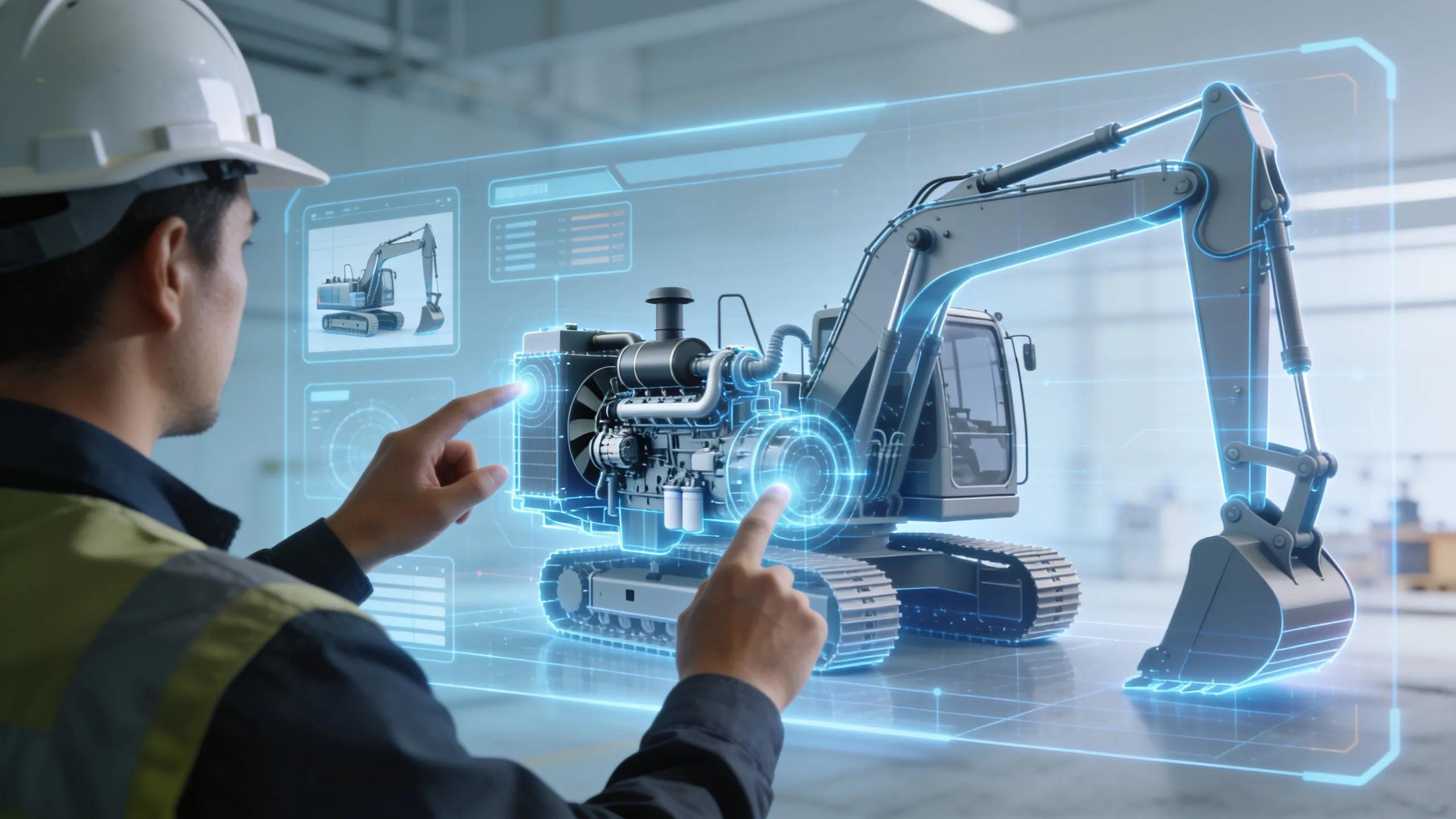
In the competitive landscape of heavy machinery trade shows, minimizing expenses is crucial for maximizing profits. Many companies face hefty shipping costs that can exceed $250,000 per event, making it essential to explore efficient alternatives. This article delves into the advantages of utilizing interactive 3D digital twins, a cutting-edge technology that not only reduces trade show shipping costs but also enhances engagement and broadens market reach. By integrating virtual solutions, companies can present their equipment more dynamically while driving lead generation and improving customer relationship management. The discussion will cover cost reduction strategies, the impact on audience engagement, practical applications for businesses, and the return on investment (ROI) that comes with adopting this innovative approach.

Cost Reduction

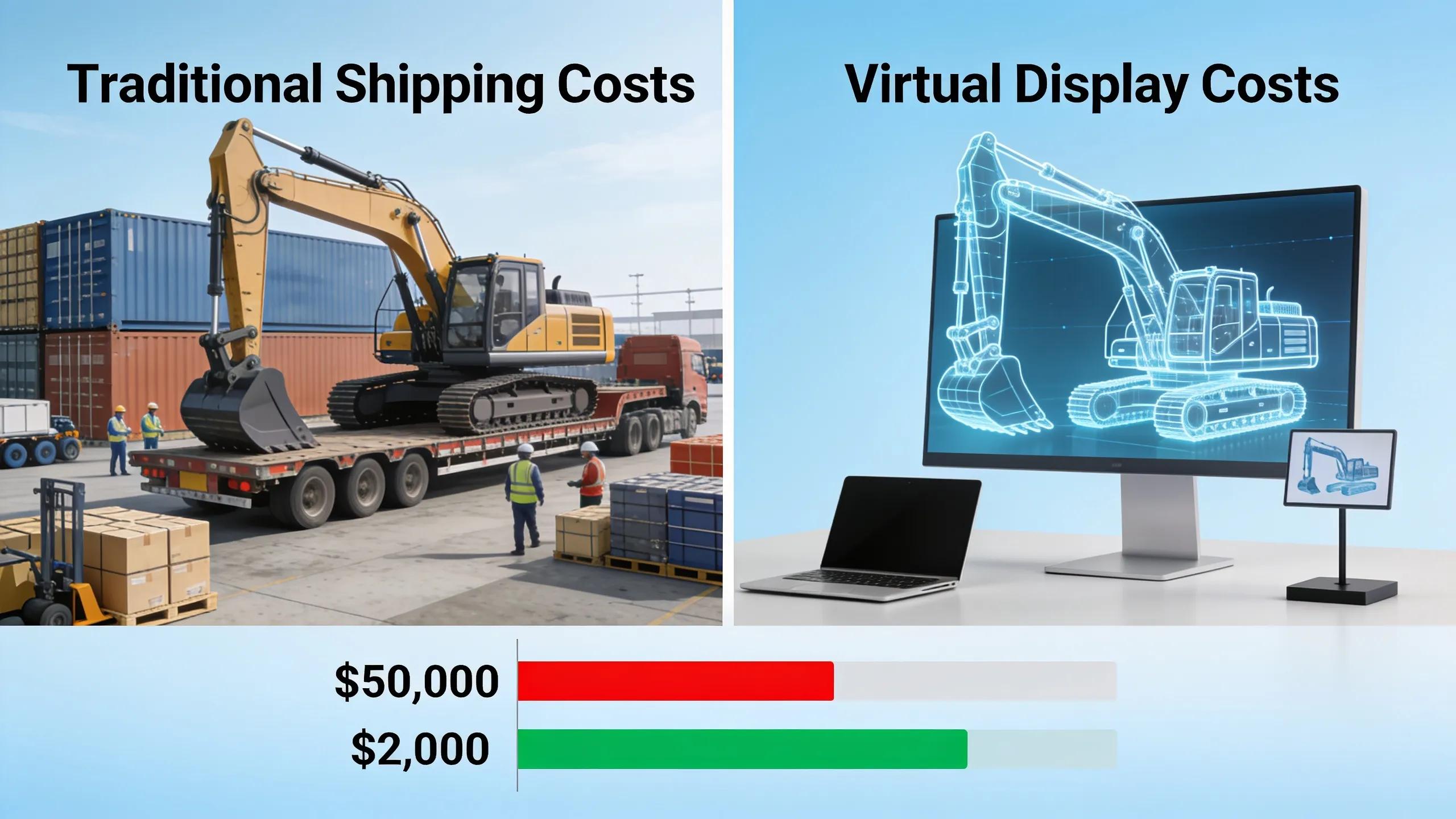
The primary financial advantage of utilizing interactive 3D digital twins lies in significant cost reductions. Companies can eliminate substantial shipping expenses typically associated with transporting heavy machinery to trade shows. This technology allows for virtual displays, which can slash logistics costs by around 40%. Incorporating 3D models enables companies to showcase a broader range of products without the constraints of physical space.

Shipping MethodCostLogistics ReductionPotential Savings
Traditional ShippingOver $250,000N/AN/A
Virtual DisplayMinimal40%Up to $250,000

Engaging with customers through 3D digital twins not only provides cost savings but also enhances the buyer’s journey, making it easier for potential clients to visualize products in an interactive environment. This budget-friendly approach opens doors for companies to allocate resources towards other pivotal areas, such as marketing and product development.

Increased Engagement

Interactive 3D digital twins significantly enhance audience engagement, as demonstrated through various studies. By utilizing this technology, companies can achieve up to five times more engagement compared to traditional static displays. The interactive nature of 3D visualizations fosters a deeper connection between potential buyers and the product, facilitating qualified conversations and lead capture.

Enhancing User Interaction

Interactive features, such as customizable viewing options and detailed exploration of equipment, allow users to engage with the display actively. This experience is far more beneficial compared to observing a physical unit in a trade show setting. As a result, companies can expect not only an increase in the quality of leads generated but also a rise in positive brand perception, as customers appreciate innovative and forward-thinking approaches.

Demonstrations and Presentations

Conducting virtual demonstrations via 3D models allows sales representatives to showcase products effectively to remote clients. This tactic not only expands the market reach but also transforms the sales approach, allowing for presentations regardless of geographical limitations. By integrating 3D models into their sales strategies, companies can reduce costs associated with physical presence while maintaining high levels of customer engagement.

Practical Applications

The use of interactive 3D digital twins extends beyond trade shows and into various business applications. Companies can leverage this technology in training sessions, remote sales, and client presentations, among other areas. The implementation of 3D models allows for a comprehensive understanding of equipment features and specifications, facilitating informed purchasing decisions by clients.

Replacement of Physical Demos

Instead of transporting machinery for live demonstrations, businesses can utilize interactive 3D models to replicate the entire experience virtually. This not only saves on logistics but also ensures that the equipment is always available for showcasing, leading to increased flexibility in scheduling demos according to client availability.

Enhancement of Web and Remote Sales

Webinars and online meetings can be significantly enhanced by integrating 3D digital twins, making remote sales pitches more compelling. By providing an interactive visual that potential clients can manipulate, businesses can convey value more effectively, likely translating into increased sales conversions.

Return on Investment (ROI)

Investing in interactive 3D digital twins offers substantial returns by not only cutting costs but also improving revenue generation potential. For instance, a single digital twin can be employed across multiple platforms and various applications, maximizing its utility and, consequently, the ROI.

Multiple Platform Usability

One of the most compelling advantages of this technology is its versatility. A well-designed 3D digital twin can be used in marketing campaigns, online sales platforms, and trade shows alike, effectively providing a unified approach to product promotion. This cross-platform functionality allows businesses to streamline marketing efforts and reduce redundancy in their promotional materials.

Data Collection for Marketing Strategies

Furthermore, these digital solutions facilitate real-time data collection, enabling companies to monitor user interactions and preferences. By analyzing this data, businesses can refine their marketing strategies, tailoring campaigns to meet the specific demands and interests of their target audience. This refined focus typically results in higher conversion rates and improved overall sales performance.

This concept of leveraging digital twins for dynamic engagement and optimization is further explored in recent research.

Digital Twin Framework for Dynamic Pricing and Customer Engagement in Metaverse Retail This research presents a multi-objective fuzzy digital twin framework for simultaneous optimization of dynamic pricing and product portfolio layout/mix in metaverse-based retail environments. In the proposed framework, avatar behavior including observation, movement, and interaction is captured as behavioral input of the digital twin, and demand is modeled using triangular fuzzy numbers to account for uncertainty arising from user behavior in the 3D environment. The decision-making model is formulated as a multi-objective optimization problem including profitability, customer engagement, demand risk, and value of complementarity/substitution relationships and is solved using NSGA-II and MOPSO algorithms. Fuzzy multi-objective digital twin framework for dynamic pricing and assortment optimization in metaverse-based retail environments, H Nozari, 2026