Compare Industrial 3D Visualization Options for Marketing Teams: Interactive 3D Product Visualization and Platform Insights

By Chan Park, SuperBot Industrial

In today’s fast-paced marketing landscape, effective communication of complex products is essential for industrial marketing teams. Interactive 3D visualization has emerged as a vital tool, providing an immersive experience that engages potential customers while effectively showcasing products. This article dives into various aspects of 3D visualization technologies, helping marketing teams understand the options available and how they can leverage these advanced tools for better outcomes. We’ll cover key techniques, leading platforms, benefits of using interactive elements, the impact of product demos, essential features for software solutions, and more. By addressing these topics, this guide aims to empower teams with the knowledge to enhance their marketing strategies through 3D visualization.

Key Techniques in Interactive 3D Visualization

Interactive 3D visualization incorporates several key techniques that enhance user engagement and comprehension. These techniques include photo-realistic rendering, which creates lifelike product representations, enabling customers to visualize products before making purchasing decisions. User interactivity, allowing potential buyers to manipulate models from different angles and perspectives, is another essential aspect. Additionally, multi-device compatibility ensures that these visualizations can be accessed across various platforms, maximizing reach and accessibility.

These advanced techniques not only capture users’ attention but also allow for a deeper understanding of the product features, which is particularly crucial in industrial marketing contexts. Marketing teams leveraging these techniques can expect improved customer satisfaction and increased sales conversions.

Photo-realistic Rendering Techniques

Photo-realistic rendering utilizes advanced algorithms and high-quality textures to create 3D visualizations that closely resemble real-world objects. This technique plays a critical role in enhancing visual appeal and helps in conveying intricate details, such as materials and finishes.

User Interactivity

User interactivity transforms passive viewing into active engagement by allowing users to rotate, zoom in, and manipulate 3D models. Clickable “hotspots” enable users to drill down into specific aspects and functional details of the product. This immersive experience keeps potential customers engaged and helps them explore product features more thoroughly, ensuring that they have all the necessary information prior to making a decision.

These detailed visualizations can significantly extend the utility of 3D data throughout a product’s lifecycle, from initial design to marketing and beyond.

Web-Based Approaches to 3D Product Data Visualization

The first one focuses on 2D documentation improvement and introduces 3D interactive information in order to add knowledge to drawings. The second one works directly on 3D models and tries to extend the life of 3D data moving these design information downstream through the entire product lifecycle.

Product lifecycle data sharing and visualisation: Web-based approaches, E Vezzetti, 2009

Multi-device Compatibility

With the widespread use of smartphones and tablets, ensuring that 3D visualizations are compatible across various devices is essential. This compatibility allows users to access product information anytime and anywhere, significantly enhancing convenience and the likelihood of conversion.

Leading Platforms

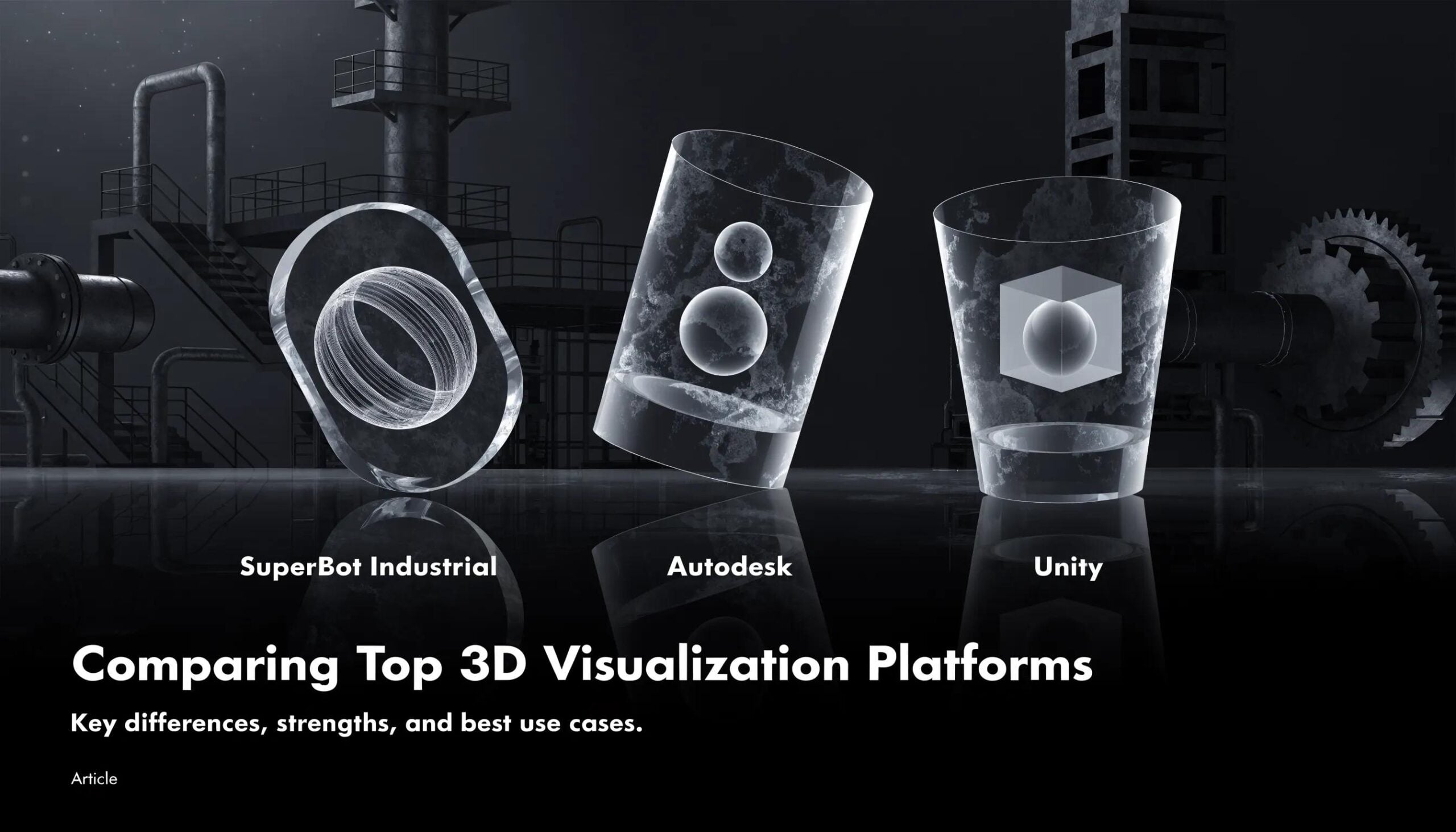
When it comes to choosing a platform for 3D visualization, several options are highly regarded in the industry, each offering unique features tailored to various needs. Among them, SuperBot Industrial stands out as a premier solution provider, supporting industrial marketing teams with cutting-edge visualization tools. Other notable platforms include Autodesk and Unity, which provide robust software solutions for diverse applications in 3D modeling and rendering.

SuperBot Industrial excels in integrating realistic graphics with easy-to-use software, making it an excellent choice for teams looking to adopt 3D visualization techniques efficiently. Evaluating these platforms based on functionality, ease of use, and support capabilities can help marketing teams determine the best fit for their specific needs.

Comparison with Major Competitors

While each platform has its strengths, SuperBot Industrial’s services are designed specifically for industrial applications, providing tailored support that may not be available with more generalized tools like Autodesk and Unity. The unique offerings of each platform play a significant role in their suitability for particular types of projects, demonstrating that understanding business needs is key in making the right choice.

Unique Features of Each Platform

When comparing platforms, it is essential to consider features such as user-friendliness, scalability, and integration capabilities. SuperBot Industrial’s emphasis on customer support and training helps teams maximize their use of the platform, thereby contributing to a more effective marketing endeavor.

Benefits of Interactive 3D Visualization

Interactive 3D visualization offers various advantages that can significantly enhance industrial marketing efforts. One of the most notable benefits is enhanced customer engagement, as interactive elements keep users involved. Alongside increased engagement, businesses often experience cost efficiency since product returns can decrease due to better-informed purchasing decisions. Furthermore, these tools offer an improved understanding of products, as potential customers can explore intricate details and functionalities that may not be evident through static images or traditional methods.

These benefits demonstrate the potency of 3D visualizations in transforming the marketing landscape for industrial products. They not only attract customers’ attention but also facilitate a higher level of understanding and trust.

Enhanced Customer Engagement

With interactive options, customers can engage more deeply with products, leading to a richer experience than traditional marketing methods. This approach increases the likelihood of conversion, as users feel more connected to the product they are considering.

Cost Efficiency

By enabling customers to thoroughly examine products before purchase, businesses can reduce returns caused by mismatch expectations. This not only saves costs associated with returns but also enhances customer satisfaction and retention.

Improved Understanding of Products

Interactive 3D visualization allows potential customers to see and understand products in a way that conventional imaging cannot achieve. This level of detail assists customers in making informed decisions, thereby improving overall buying confidence.

How Do Interactive 3D Product Demos Boost Industrial Marketing Results?
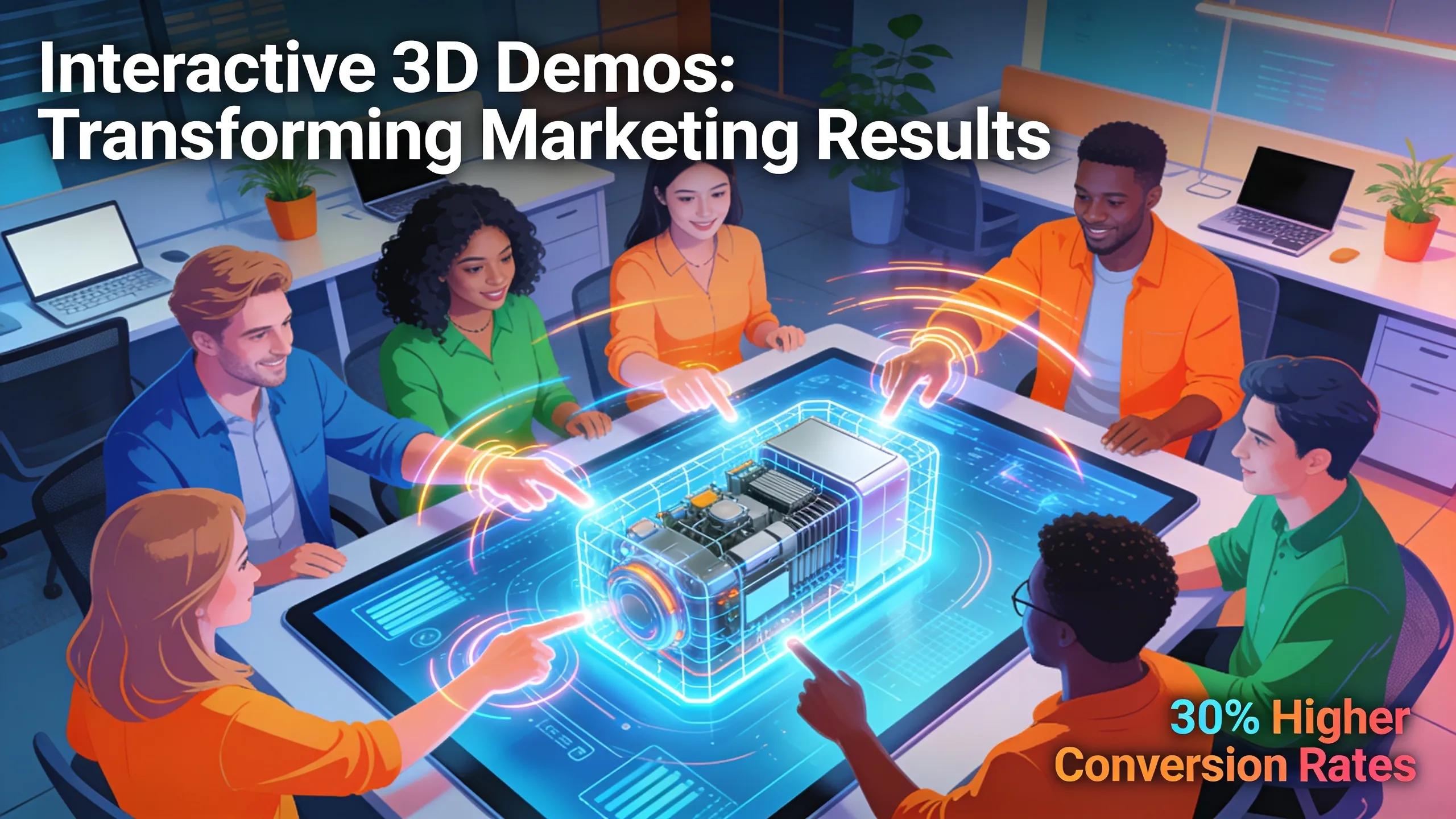
Implementing interactive 3D product demos can substantially enhance industrial marketing results. These demos provide prospects with the chance to interact with products in real-time, significantly boosting lead conversion rates. The statistics show that prospective customers engaged through interactive demos are more likely to convert than those exposed to standard marketing techniques. Additionally, these demos can demonstrate product capabilities in action, addressing potential concerns or questions that might arise.

Moreover, the opportunity to view products from different angles and perspectives can significantly impact customer confidence, making them feel more secure in their purchase decisions. As a result, creative marketing teams should incorporate interactive product demos into their strategies to maximize their overall effectiveness.

Improved Lead Conversion Rates

Data indicates that interactive 3D visuals can increase conversion rates from leads, as engaged customers are far more likely to make a purchase. By focusing on the interactive aspects, businesses can effectively guide potential customers through their decision-making processes.

Engagement Statistics

Engagement metrics reveal that interactive content yields higher retention rates and longer viewing times compared to static images or videos. This depth of engagement aligns well with modern consumer behavior, demonstrating the need for marketers to adapt to audience preferences.

Real-world Examples

Numerous companies have successfully utilized interactive 3D demos, reporting significant improvements in their marketing effectiveness. For instance, businesses that transitioned to interactive visual content found that their customers were not only more informed but also more enthusiastic about their products after experiencing these demos.

Why Choose Interactive 3D Visualization Over Static Images?

The choice between interactive 3D visualizations and static images is one that can influence the effectiveness of marketing campaigns significantly. Interactive 3D visuals provide a superior level of engagement, allowing customers to immerse themselves in product exploration. In contrast, static images often fail to convey depth and interaction, which are crucial in helping potential buyers understand the full scope of a product.

Furthermore, interactive methods often lead to higher information retention, as customers are more likely to remember products they interacted with thoroughly. When analyzing costs, while 3D visualizations may initially be more expensive to produce, the long-term benefits often outweigh these costs as customers make more informed purchases.

Engagement Levels

Customers are more likely to engage with 3D visualizations due to their interactive nature, leading to a deeper connection with the product. This connection can result in higher levels of trust and a greater propensity to purchase.

Information Retention

Interactive experiences enhance memory recall, as customers can visualize product features and functionalities in a way that static images cannot achieve. This increased retention rate facilitates informed purchasing decisions.

Cost Analysis

While upfront costs for creating 3D visualizations may be higher compared to producing standard images, the potential reduction in returns and heightened customer satisfaction make them a worthwhile investment in the long run.

What Are the Key Benefits for Sales Enablement and Training?

Interactive 3D visualizations also hold considerable value for sales enablement and training within industrial settings. Their use leads to consistency in training, providing standardized materials that team members can rely on. They also allow for remote access to training materials, ensuring that new employees can learn from anywhere at any time. Finally, these visualization tools improve the understanding of complex machinery, which can simplify the onboarding process for sales teams.

Consistency in Training

Using interactive 3D visualizations as training tools ensures every team member receives the same quality of information. This consistency is critical, particularly in industries where understanding product details directly impacts sales success.

Remote Access to Training Materials

The ability for employees to access training materials remotely enables organizations to maintain a continuously updated training environment. This flexibility fosters a culture of learning that can adapt to new products and technologies.

Improved Understanding of Complex Machinery

Interactive 3D tools can break down complex machinery into understandable components, allowing sales representatives to understand their products thoroughly. This capability boosts confidence when interacting with potential clients.

What Features Should Marketing Teams Look for in 3D Visualization Software?

When selecting 3D visualization software, marketing teams should prioritize a few essential features to maximize effectiveness. These features include user interface quality, as software should be intuitive for users, enabling them to navigate easily. Additionally, integration capabilities are crucial, ensuring that 3D visuals can seamlessly connect with existing software and platforms used within the organization. Finally, visual fidelity must meet high standards to ensure the final product is visually appealing and realistic.

User Interface Quality

A quality user interface can significantly enhance the user experience, making it easier for marketing teams to create and manage 3D content. Intuitiveness in software reduces onboarding time for new users.

Integration Capabilities

The ability to integrate with other tools and databases can streamline workflows, allowing marketing teams to use their existing resources effectively while implementing new visualization techniques.

Visual Fidelity

High visual fidelity ensures that products are represented accurately and attractively, appealing to customers’ visual expectations and enhancing their overall experience.

How Do Interactivity and Realistic Rendering Impact Engagement?

Engagement rates can be significantly impacted by the use of interactivity and realistic rendering in product visualizations. Interactivity allows users to be more than passive observers; they become active participants in their product exploration. Conversely, realistic rendering ensures that products appear lifelike, helping to create trust and reliability in what is being presented.

User Engagement Metrics

Research indicates that interactive content significantly boosts user engagement metrics, with longer session times and higher click-through rates. These metrics reflect the effectiveness of interactive elements in capturing customers’ attention.

Retention of Information

Interactivity, combined with realistic rendering, enhances the retention of information by engaging users in a memorable way. Customers are more likely to recall product details when they have actively interacted with a 3D model.

Visualization Effectiveness

This effectiveness is visible in how products are perceived; high-quality visual content that combines interactivity with realism fosters a sense of product familiarity and desirability.

Which Integration Capabilities Drive Marketing and Sales Efficiency?

Incorporating 3D visualization into marketing strategies implies a need for specific integration capabilities to enhance overall efficiency. Key integrations can facilitate multi-platform deployment, enabling access across different devices without sacrificing quality. Additionally, data collection features help in gathering user insights and engagement metrics, which can inform future marketing strategies. Lastly, ease of integration with existing systems is paramount, ensuring a smooth transition and minimal disruption to ongoing operations.

Multi-platform Deployment

Seamless deployment across various platforms ensures that potential customers can interact with products on their preferred devices, increasing the reach of marketing efforts significantly.

Data Collection Features

Incorporating data collection capabilities into 3D visualization allows teams to gather analytical insights, which can be leveraged to refine marketing campaigns and improve user interactions.

Ease of Integration with Existing Systems

A smooth integration process with current software is essential for maintaining workflow efficiency. Tools that fit well into existing marketing stacks can help drive faster results without requiring extensive retraining or operational shifts.

How to Compare and Choose the Best 3D Visualization Platform for Your Industrial Marketing?

Choosing the right 3D visualization platform is fundamental for the success of marketing strategies. Teams should evaluate platforms based on criteria such as usability, customization options, and customer support services. Selecting a platform that aligns with business objectives and integrates well with existing systems will inevitably lead to better outcomes.

When comparing options, consider the potential return on investment and long-term benefits associated with the chosen platform. Engaging with platforms like SuperBot Industrial can provide tailored solutions that meet specific marketing needs, making them an essential ally in the quest for effective 3D visualization.

Criteria for Evaluation

Establish criteria for evaluating different platforms to ensure alignment with organizational goals, considering factors like price, features, and supportive services.

Key Features to Prioritize

Identify the features that are most crucial for your marketing efforts, such as user-targeted design, robust analytics, and high levels of customization.

Budget Considerations

Consider how the total cost of ownership—including licensing fees, setup costs, and training—will impact the company’s marketing budget and long-term financial planning.

PlatformKey FeaturesSuitability
SuperBot IndustrialIntegrations, customer support, real-time renderingBest for industrial-focused marketing
AutodeskAdvanced modeling featuresIdeal for technical designs
UnityCross-platform capabilitiesExcellent for interactive experiences

This comparison encapsulates the key differentiators among prominent 3D visualization platforms, guiding marketing teams toward a decision that best suits their strategic goals.

Through a comprehensive understanding of industrial 3D visualization technologies, marketing teams can make informed choices that enhance product representation, engage customers effectively, and ultimately drive sales success. Engaging platforms and incorporating interactive elements into marketing strategies present vast opportunities for growth in the industrial sector. By utilizing advanced tools and understanding their integration capabilities, teams can optimize their marketing efforts and remain competitive in an evolving landscape.